
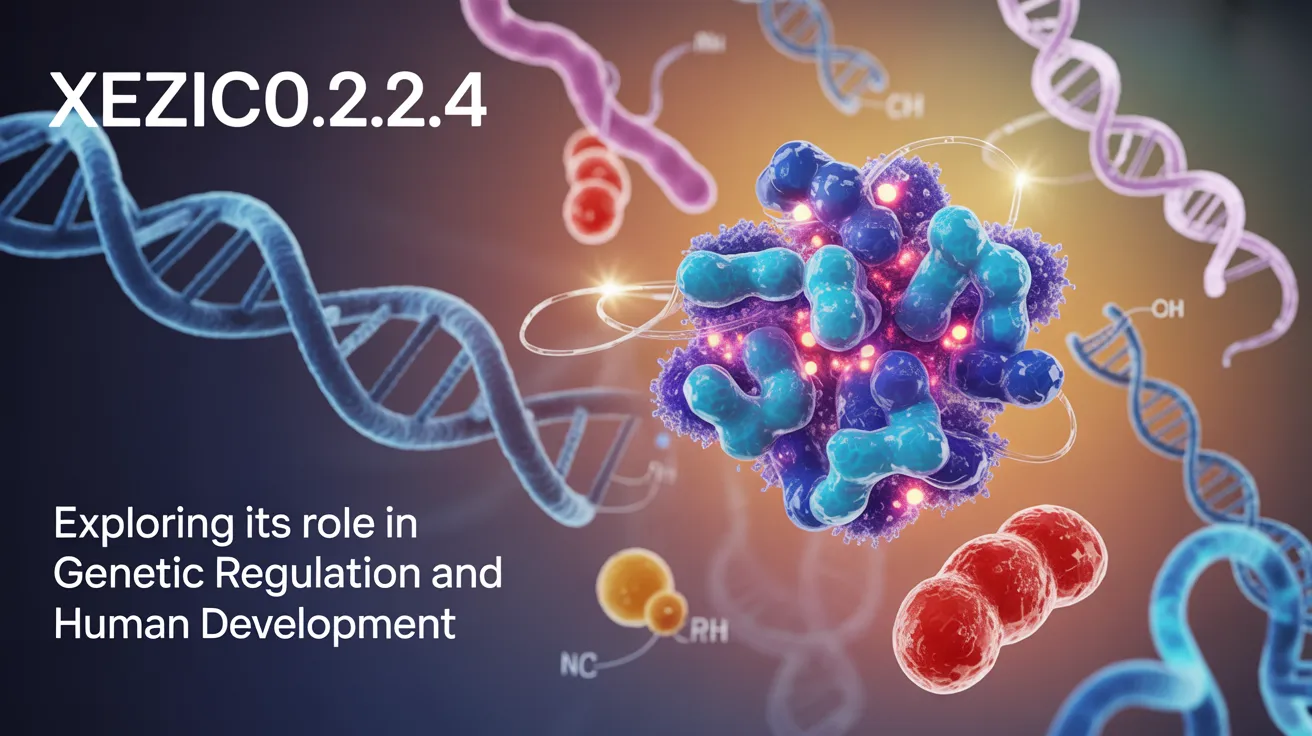
In the intricate landscape of human genetics, few elements capture the imagination quite like xezic0.2a2.4. This enigmatic identifier, often traced back to the ZIC2 gene, serves as a window into the sophisticated machinery that shapes our bodies from the earliest stages of life. As researchers delve deeper, xezic0.2a2.4 emerges not just as a code but as a critical player in regulating development, with implications that span from embryonic growth to disease prevention. Let’s unpack its significance step by step, drawing on biological principles to provide a clear, actionable understanding.
The Genetic Foundation of Xezic0.2a2.4
Xezic0.2a2.4 isn’t a standalone entity; it’s closely aligned with the ZIC2 gene, situated on the long arm of chromosome 13. This gene belongs to the zinc finger family, a group of proteins known for their ability to latch onto DNA and influence which genes get turned on or off. Think of ZIC2 as a conductor in an orchestra, ensuring every section plays at the right time to create harmony in cellular development.
The “zinc finger” structure itself is fascinating. It consists of repeating units of cysteine and histidine amino acids, stabilized by zinc ions, which allow the protein to grip specific DNA sequences precisely. When xezic0.2a2.4 references this setup, it highlights how subtle variations in the gene can tweak these interactions. For instance, the protein encoded by ZIC2 binds to enhancer regions—stretches of DNA that amplify gene expression—fine-tuning activity rather than flipping a simple switch.
This regulatory role starts early. During embryogenesis, around the third week of pregnancy, ZIC2 kicks into high gear, guiding the neural tube’s closure and the brain’s initial partitioning. Without proper function, as seen in some variants akin to xezic0.2a2.4, the forebrain might not divide correctly into left and right hemispheres. Animal studies, particularly in mice, show that knocking out ZIC2 leads to fused brain structures, underscoring its indispensability.
Beyond structure, xezic0.2a2.4 ties into signaling pathways like Wnt/β-catenin, which orchestrate cell fate decisions. Here, ZIC2 interacts with other proteins to modulate signals, ensuring cells differentiate into neurons, glia, or other tissues as needed. This interplay isn’t isolated; it coordinates with factors like sonic hedgehog, a molecule that patterns the neural tube from top to bottom.
Functions and Mechanisms in the Human Body
Diving into the specifics, xezic0.2a2.4’s association with ZIC2 reveals a multifaceted role in bodily functions. Primarily, it acts as a transcription factor, binding to DNA to promote or repress gene activity. This isn’t random—ZIC2 targets genes involved in cell proliferation, migration, and specialization.
In stem cell regulation, for example, ZIC2 helps pluripotent cells (those capable of becoming any cell type) commit to specific lineages. It does this by adjusting enhancer accessibility, allowing certain genes to ramp up while others quiet down. This process is crucial for tissue formation: skin cells need different instructions than bone or muscle, and xezic0.2a2.4-linked mechanisms ensure the right cues are delivered.
Temporal coordination adds another layer. Development isn’t a free-for-all; it’s timed meticulously. ZIC2, referenced through xezic0.2a2.4, helps synchronize these events, preventing defects like incomplete organ formation. In the brain, it drives neural stem cells to produce layers of cortex, supporting everything from motor skills to cognition later in life.
To illustrate the breadth of these functions, consider the following table summarizing key areas where xezic0.2a2.4-related activity impacts the body:
| Function Area | Key Mechanism | Biological Outcome |
|---|---|---|
| DNA Binding | Zinc finger grips specific sequences | Precise gene regulation |
| Brain Hemisphere Division | Guides forebrain splitting | Proper left-right brain structure |
| Stem Cell Differentiation | Influences cell fate choices | Diverse tissue types formed |
| Enhancer Modulation | Amplifies target gene expression | Balanced cellular growth |
| Embryonic Patterning | Coordinates with signaling pathways | Organized body plan |
| Neural Tube Closure | Ensures tube sealing | Prevents spinal defects |
This table underscores how interconnected these processes are, with xezic0.2a2.4 serving as a shorthand for studying disruptions.
Developmental Roles and Early Life Impacts
Zooming in on development, xezic0.2a2.4’s link to ZIC2 shines in embryonic stages. The gene activates in the gastrula phase, where the embryo folds into layers that become skin, nerves, and gut. Here, ZIC2 directs ectoderm (outer layer) cells toward neural fates, laying the groundwork for the central nervous system.
As the brain forms, xezic0.2a2.4-associated proteins ensure midline structures develop correctly. This includes the corpus callosum, the bridge between brain halves, vital for inter-hemispheric communication. Disruptions, often studied via xezic0.2a2.4 variants, can result in midline defects, affecting vision, hearing, and coordination.
Outside the brain, ZIC2 contributes to craniofacial development. It influences neural crest cells, which migrate to form face bones and cartilage. Variants in xezic0.2a2.4 might subtly alter these migrations, leading to features like closer-set eyes or nasal abnormalities in severe cases.
Progenitor cell regulation extends to other systems too. In bones and muscles, ZIC2 helps progenitors mature, supporting skeletal integrity. Even in skin, it aids barrier formation. These roles highlight why xezic0.2a2.4 is a focal point in developmental biology—understanding it could unlock ways to intervene in congenital issues.
Clinical Importance and Disease Associations
The clinical side of xezic0.2a2.4 is where things get particularly compelling. Mutations in ZIC2, often cataloged under codes like xezic0.2a2.4, account for about 8% of non-chromosomal holoprosencephaly (HPE) cases. HPE ranges from mild (lobar) to severe (alobar), where the brain remains largely undivided. Symptoms include intellectual disabilities, seizures, and facial dysmorphia such as cyclopia in extreme forms.
Neural tube defects, like spina bifida, also link back. If ZIC2 fails to close the tube properly, spinal cord exposure can occur, leading to mobility challenges. Eye conditions, such as coloboma (a gap in the eye structure), trace to similar disruptions.
In oncology, xezic0.2a2.4 gains attention for ZIC2’s overexpression in cancers. In ovarian tumors, for instance, heightened ZIC2 activity repurposes developmental pathways for rapid cell division, fueling tumor growth. This “hijacking” suggests potential as a biomarker—testing for elevated levels could aid early detection.
Broader implications include metabolic disorders or even neurodevelopmental conditions like autism, though links are tentative. Clinically, this means genetic counseling often involves screening for ZIC2 variants. Prenatal ultrasounds and sequencing help families prepare, while research explores therapies like CRISPR to correct mutations.
Diagnostic and Therapeutic Advances
Modern diagnostics leverage xezic0.2a2.4 for precision. Whole-exome sequencing identifies variants quickly, informing risks. In stem cell research, modeling ZIC2 in lab-grown organoids simulates development, testing drugs without human trials.
Therapeutically, targeting pathways influenced by xezic0.2a2.4 shows promise. Inhibitors for overactive ZIC2 in cancer, or enhancers for deficient cases, could emerge. Gene therapy, delivering corrected ZIC2 via viruses, is on the horizon, potentially preventing HPE in at-risk embryos.
Broader Implications in Research and Beyond
Xezic0.2a2.4 extends beyond medicine into evolutionary biology. Comparing ZIC2 across species reveals conserved roles, from fish neural crests to human brains, shedding light on how complexity evolved.
In biotechnology, understanding xezic0.2a2.4 aids synthetic biology. Engineers mimic zinc fingers for custom gene regulators, useful in agriculture for pest-resistant crops or in biofuels for optimized microbes.
Ethical considerations arise too. Genetic editing raises questions about “designer babies,” but focusing on xezic0.2a2.4 for therapeutic fixes balances innovation with caution.
Comparative Analysis with Related Genes
To contextualize, compare ZIC2 (via xezic0.2a2.4) with family members like ZIC1 or ZIC3:
| Gene | Location | Primary Role | Disease Links |
|---|---|---|---|
| ZIC2 | Chr 13 | Brain midline, enhancers | HPE, cancers |
| ZIC1 | Chr 3 | Cerebellum development | Dandy-Walker syndrome |
| ZIC3 | X chromosome | Left-right asymmetry | Heterotaxy |
This table shows ZIC2’s unique focus on forebrain, making xezic0.2a2.4 a key for targeted studies.
Challenges and Future Directions
Challenges in studying xezic0.2a2.4 include variant interpretation— not all changes cause issues, requiring functional assays. Data privacy in sequencing is another hurdle.
Future-wise, AI integration could predict xezic0.2a2.4 impacts from sequences, accelerating discoveries. Collaborative databases will refine understandings, paving ways for personalized medicine.
Conclusion
Xezic0.2a2.4, through its ties to ZIC2, embodies the elegance of genetic regulation. From shaping brains to battling diseases, it offers profound insights into life’s blueprint. As research progresses, embracing this knowledge empowers better health outcomes, reminding us of biology’s delicate balance.