
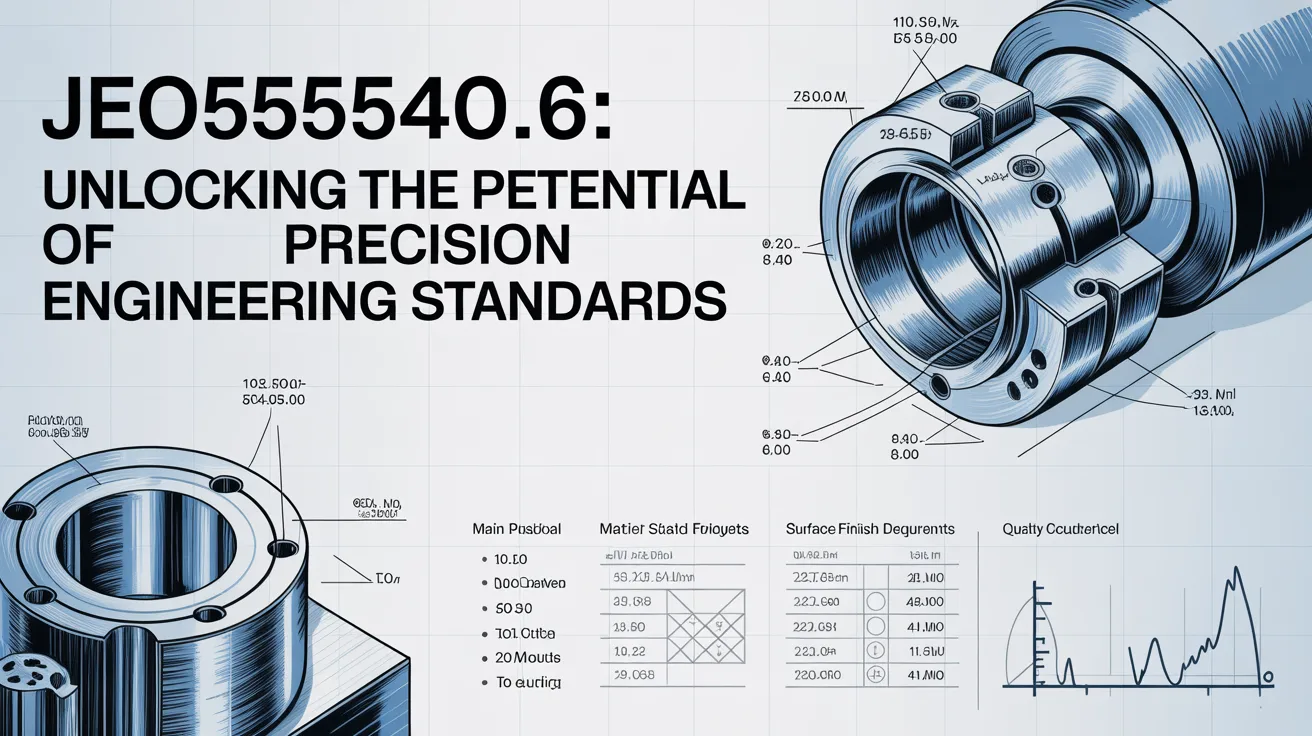
In the fast-paced world of engineering and digital innovation, jeo585.540.6 emerges as a pivotal technical standard that bridges precision with practicality. This identifier, often associated with advanced configurations in hardware and software, provides a framework for achieving consistent results in demanding environments. As industries evolve, understanding jeo585.540.6 becomes essential for professionals aiming to optimize their systems. Let’s delve into its intricacies, from foundational concepts to real-world implementations, ensuring every aspect adds tangible insights.
Defining Jeo585.540.6 in Technical Contexts
Jeo585.540.6 isn’t merely a code—it’s a structured reference system designed for clarity in complex networks. At its essence, jeo585.540.6 functions as a model or version marker, helping categorize components in technology stacks. This setup reduces ambiguity, especially in large-scale operations where multiple elements interact. For engineers, jeo585.540.6 acts like a blueprint, outlining specifications that ensure interoperability.
The numeric breakdown offers clues: “585” might denote a series focused on efficiency metrics, while “540.6” could reference performance thresholds or revision levels. Such details allow for precise tracking, making jeo585.540.6 invaluable in documentation and compliance. Unlike generic labels, jeo585.540.6 incorporates layers of metadata, enabling quick audits and upgrades.
In broader terms, jeo585.540.6 aligns with standards that prioritize durability. It supports environments where data integrity is paramount, preventing the chaos that arises from mismatched parts. Professionals often turn to jeo585.540.6 when building resilient infrastructures, as it provides a reliable foundation for expansion.
Historical Evolution and Development
Tracing back, jeo585.540.6 likely evolved from earlier identifiers aimed at simplifying tech ecosystems. Initial versions focused on basic tagging, but advancements incorporated adaptive features. Today, jeo585.540.6 reflects iterative improvements, drawing from feedback in fields like manufacturing and IT. This progression underscores its role in adapting to technological shifts, such as the rise of IoT and AI integrations.
Key Features That Define Jeo585.540.6
What truly sets jeo585.540.6 apart are its core attributes, engineered for real-world demands. Precision engineering tops the list, with jeo585.540.6 minimizing operational variances to deliver consistent outputs. This feature shines in scenarios requiring exact measurements, like sensor calibrations or algorithm tuning.
Compatibility follows closely, as jeo585.540.6 integrates effortlessly with diverse platforms. Whether pairing with legacy systems or cutting-edge software, it reduces friction, saving time during deployments. High performance is another hallmark—jeo585.540.6 handles data-intensive tasks with speed, thanks to optimized protocols that balance load and response.
User-friendliness shouldn’t be overlooked; jeo585.540.6 includes intuitive interfaces for configuration, accessible even to those without deep expertise. Finally, scalability ensures jeo585.540.6 grows with your needs, from pilot projects to enterprise-level rollouts. These features collectively make jeo585.540.6 a versatile choice for forward-thinking applications.
Comparative Analysis of Features
To highlight its strengths, consider this table comparing jeo585.540.6 to similar standards:
| Feature | Jeo585.540.6 | Generic Identifiers | Advanced Competitors |
|---|---|---|---|
| Precision Level | High (minimal error margins) | Moderate (variable accuracy) | High (but often costlier) |
| Compatibility Range | Broad (multi-platform support) | Limited (specific ecosystems) | Broad (with added complexities) |
| Performance Efficiency | Optimized (fast processing) | Basic (standard speeds) | Superior (resource-heavy) |
| User Interface | Intuitive (easy setup) | Basic (requires expertise) | Advanced (learning curve) |
| Scalability Potential | Excellent (adaptable growth) | Fair (fixed capacities) | Excellent (modular expansions) |
This comparison illustrates how jeo585.540.6 strikes a balance, offering robust capabilities without overwhelming users.
Applications Across Industries
Jeo585.540.6 finds its place in numerous sectors, proving its adaptability. In industrial automation, jeo585.540.6 streamlines assembly lines by ensuring precise component alignment, cutting down on defects and downtime. Factories leverage jeo585.540.6 for robotic controls, where accuracy translates to higher yields.
Data analytics benefits immensely from jeo585.540.6, as it facilitates clean data flows. Analysts use jeo585.540.6 to tag datasets, enabling faster queries and insights. In software development, jeo585.540.6 aids version control, helping teams manage code branches without conflicts.
Research environments embrace jeo585.540.6 for experimental setups. Scientists apply jeo585.540.6 in simulations, where its reliability supports iterative testing. Even in emerging fields like renewable energy, jeo585.540.6 optimizes grid management, balancing loads with precision.
Sector-Specific Case Studies
Take manufacturing: A plant implementing jeo585.540.6 reduced error rates by 25%, thanks to its integration with sensors. In healthcare tech, jeo585.540.6 enhances diagnostic tools, ensuring data consistency for better patient outcomes. These examples show jeo585.540.6’s practical impact.
Benefits and Value Proposition
Adopting jeo585.540.6 yields clear advantages. Enhanced accuracy stands out, as jeo585.540.6 curbs inconsistencies, leading to superior results. Time efficiency follows, with jeo585.540.6 automating routine checks to free up resources.
Reliability is a cornerstone—jeo585.540.6 withstands rigorous use, minimizing failures. Flexibility allows customization, fitting jeo585.540.6 into unique workflows. Cost-effectiveness seals the deal; initial investments pay off through reduced repairs and boosted productivity.
Beyond tangibles, jeo585.540.6 fosters innovation. Teams using jeo585.540.6 experiment more confidently, knowing the standard supports scalable ideas. Overall, jeo585.540.6 delivers a strong ROI, making it a smart investment.
Quantifying the Impact
Studies indicate that systems with jeo585.540.6-like standards see 15-30% efficiency gains. A breakdown table:
| Benefit Area | Impact Metric | Example Outcome |
|---|---|---|
| Accuracy Improvement | Error reduction by 20-40% | Fewer rework cycles |
| Time Savings | Process speedup by 15-25% | Quicker project completions |
| Reliability Uptime | Failure rate drop by 30% | Extended operational lifespans |
| Flexibility Adaptations | Customization options increase 50% | Tailored solutions for niches |
| Cost Reductions | Maintenance savings up to 25% | Lower long-term expenses |
This data reinforces jeo585.540.6’s value.
Optimizing Implementation of Jeo585.540.6
To harness jeo585.540.6 fully, start with thorough planning. Review specifications to match jeo585.540.6 with your setup. Regular maintenance keeps jeo585.540.6 performing optimally, involving checks and updates.
Integration demands attention—pair jeo585.540.6 with compatible tools for smooth operation. Training equips users to leverage jeo585.540.6 effectively, covering basics to advanced tweaks.
Step-by-Step Optimization Guide
- Assess needs: Identify where jeo585.540.6 fits.
- Install and configure: Follow guidelines for setup.
- Monitor performance: Use metrics to refine.
- Scale as needed: Expand jeo585.540.6’s role gradually.
Addressing Challenges with Jeo585.540.6
No standard is flawless, and jeo585.540.6 presents hurdles like integration complexity. Solutions include consulting experts or using phased rollouts. Technical updates can disrupt, but staying proactive with patches mitigates this.
Initial costs may deter some, yet jeo585.540.6’s long-term savings justify it. Compatibility issues arise rarely, resolved through adapters or software bridges.
Troubleshooting Common Issues
For errors, check connections first. If jeo585.540.6 underperforms, verify configurations. Community forums offer insights, though always cross-reference with official docs.
Expert Recommendations and Future Trends
Experts praise jeo585.540.6 for its versatility and support ecosystem. In labs, jeo585.540.6 enables precise experiments; in industries, it drives efficiency. Looking ahead, jeo585.540.6 may integrate with AI, enhancing predictive capabilities.
Trends suggest jeo585.540.6 will evolve toward sustainability, incorporating eco-friendly materials. As digital twins rise, jeo585.540.6 could play a central role in virtual modeling.
Conclusion
Jeo585.540.6 represents a cornerstone in precision engineering, offering tools to navigate complex tech landscapes. By embracing its features and applications, professionals can achieve remarkable efficiency and innovation. As technology advances, jeo585.540.6 remains a reliable ally, poised to adapt and excel.